
Introduction
If you ask students what they want from a tech career, the answers are usually similar good salary, stable growth, and skills that don’t become outdated too quickly.
The problem is, most learning paths don’t guarantee any of that.
Technologies change. Frameworks get replaced. And sometimes, people spend months learning something only to realize the industry has already moved ahead.
That’s why the combination of Java full stack + AI is getting attention right now.
It’s not just about adding another skill. It’s about combining something stable (Java ecosystem) with something evolving (AI tools and workflows).
For students in Mumbai, where competition is high and opportunities are equally dynamic, this combination is starting to make practical sense.
Why Java Full Stack Still Matters in 2026
Despite all the new technologies, Java hasn’t disappeared.
In fact, it’s still widely used in:
- enterprise applications
- banking systems
- large-scale backend services
The reason is simple reliability.
Companies don’t switch critical systems frequently. They stick with technologies that are tested and stable.
So while newer stacks come and go, Java continues to hold its place.
Where AI Fits Into Full Stack Development
Now comes the interesting part.
AI is not replacing Java developers. It’s changing how they work.
Instead of:
- writing every function manually
- debugging everything from scratch
- spending hours on repetitive setup
Developers are using AI to:
- generate base code
- fix errors faster
- automate workflows
- improve productivity
So the role shifts slightly from just coding → to building systems efficiently.

Skills You Need for Java Full Stack with AI
Let’s break this down in a practical way.
1. Core Java (Non-Negotiable)
You need to understand:
- OOP concepts
- collections
- exception handling
- multithreading basics
Without this, AI-generated code won’t make much sense.
2. Backend Development
Frameworks like:
- Spring Boot
- REST APIs
You should know how to:
- build APIs
- connect databases
- handle requests/responses
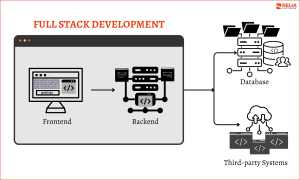
3. Frontend Development
This is where many students struggle.
You need:
- HTML, CSS
- JavaScript
- frameworks like React or Angular
A structured Javascript Training can help build this foundation properly instead of learning randomly.
4. Database Management
MySQL / PostgreSQL
basic queries
relationships
5. AI Tool Usage
This is the differentiator.
You should know how to:
- use AI for code generation
- debug using AI tools
- automate workflows
This doesn’t require deep AI knowledge just practical usage.
A Realistic Roadmap (Step-by-Step)
Instead of trying everything at once, a phased approach works better.
Phase 1 (Month 1–2): Foundations
Learn Java basics
Practice simple programs
Understand logic
Phase 2 (Month 3–4): Backend
Learn Spring Boot
Build simple APIs
Connect database
Phase 3 (Month 5–6): Frontend
Learn JavaScript
Build UI
Connect frontend with backend
Phase 4 (Month 7): Projects
Build 2–3 full stack apps
Add authentication
Deploy projects
Phase 5 (Month 8): AI Integration
Use AI tools in development
Optimize workflow
improve productivity
Many students accelerate this journey through a Java Full Stack Training Course that focuses on projects instead of theory.
What Kind of Projects Should You Build?
Projects matter more than certificates.
Some useful ideas:
- task management app
- e-commerce backend
- job portal
- booking system
Focus on:
- functionality
- clean structure
- usability
Salary Expectations in Mumbai (2026)
Let’s keep this realistic.
Fresher (0–1 year):
₹3L – ₹6L per year
1–3 years:
₹6L – ₹12L per year
3–5 years:
₹12L – ₹20L+
Developers who:
- understand AI tools
- build real projects
- communicate well
often move faster in this range.
Freelancing and Side Income Opportunities
Full stack skills are not limited to jobs.
You can:
- build websites for clients
- create small SaaS tools
- automate business processes
AI helps here by:
- reducing development time
- improving efficiency
Common Mistakes Students Make
1. Learning Without Building
Watching tutorials without creating projects.
2. Ignoring Java Fundamentals
Jumping to frameworks too quickly.
3. Over-Reliance on AI
Using AI without understanding code.
4. No Consistency
Learning in bursts instead of daily practice.
How to Stand Out in Mumbai’s Competitive Market
You don’t need to be perfect. You need to be practical.
Focus on:
- real projects
- clean GitHub profile
- basic communication skills
Companies don’t expect you to know everything but they expect you to apply what you know.
Future Scope
Java isn’t going anywhere soon.
AI will continue to evolve.
The combination of both creates:
- stability
- adaptability
- long-term growth
Conclusion
A career in Java full stack development is still relevant.
Adding AI to that skill set makes it more powerful not because it replaces effort, but because it improves efficiency.
If you approach this step by step, focus on building, and avoid unnecessary complexity, the path becomes much clearer.
And in a city like Mumbai, where opportunities and competition exist side by side, that clarity matters.
Keep reading
 Full Stack & ProgrammingCore Java vs Advanced Java: What’s the Difference and What Should You Learn First?Core Java covers the language fundamentals, while “Advanced Java” means enterprise and web development with JDBC, Spring Boot and JPA. Learn what each includes and the…Full Stack & ProgrammingHow Much DSA Do You Need for Placements? A Practical Guide for FreshersFull Stack & Programming5 Full Stack AI Projects to Get Hired That You Can Build in 2026← Previous articleHow to Use GitHub Copilot and ChatGPT for Full Stack Development to Build Apps 3x FasterNext article →How to Integrate Generative AI APIs into React and Node.js Application